


On Failure, Faith, and the God Who Gardens Our Losses
The question sounds so clean, so full of promise:
What would you attempt if you were guaranteed not to fail?
It rolls off the tongue like courage, like freedom.
But turn it over in your palm and the other side gleams different.
Why do I crave the guarantee at all?
Why do I imagine faith as a contract instead of a covenant?
Because failure scares me.
Because I still forget that failure is not the thief.
It is the tiller.
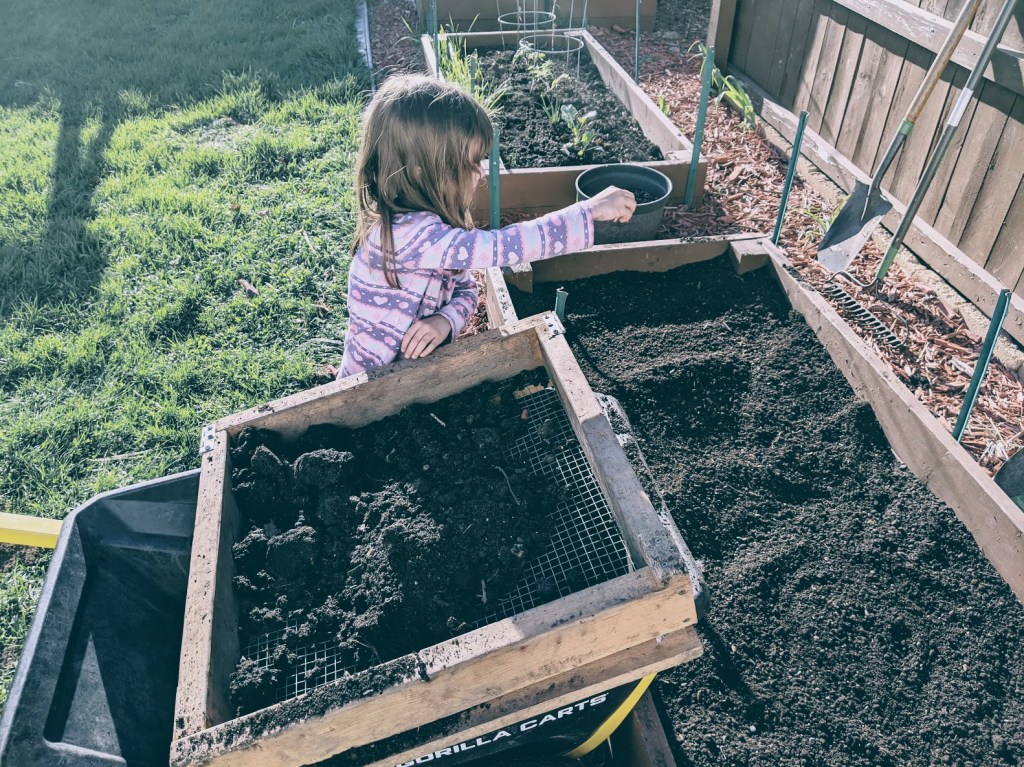
The Compost of Chaos
My first month as a teacher in an inner-city middle school, I learned that lesson with blood in my mouth.
A high school student — not mine, just passing through — swung without warning as he walked past my door.
My glasses flew, his too.
We both bent down.
I picked up what I thought were mine.
They weren’t.
He threw my pair back at me, hard, and kept moving down the hall, hunting a smaller target.
The gang squad drove me through the neighborhood that afternoon. I pointed out the boy in his long coat. They knew him. They took him in.
I took the next day off.
When I returned, my students stood a little taller, as if to protect me.
One boy tore out two pages from the phone book — listings for self-defense classes. He pressed them into my hand. “So you can learn to fight back,” he said.
That was tenderness disguised as toughness.
I almost wept.
A few weeks later, a man across the street fired a .22 rifle into my classroom.
I heard the first crack and thought it was construction.
My students knew better. They dove.
One crawled over and pulled me down.
Another hit the call button.
Sirens, glass, dust.
But inside the wreckage there was a strange quiet.
Fear and care braided together.
A kind of peace.
That year did not destroy me. It seasoned me.
Trauma turned to compost; compassion took root.
I learned that faith does not always calm the storm.
Sometimes it just keeps you standing in the wind.

The Quiet Fire
Years earlier, during a Campus Crusade conference in Daytona, I was sitting on a dryer in a laundromat, reading Dick Purnell’s 21-Day Experiment in Knowing God and waiting for my clothes to finish tumbling. The air smelled of detergent and damp cotton. The hum of the machines was steady, almost liturgical.
A young woman wearing the same wristband paused beside me. She looked uncertain, her eyes carrying a quiet ache.
“You seem at peace,” she said softly. “I want that.”
I did not have a teaching job yet, no classroom, no stories of failure or faith to speak of—only the faint awareness that God was near. I did not know it then, but that was the first spark of the quiet fire that would one day steady my life.
It was not something I did.
It was Someone I knew.
For a season, I was living in rhythm with the Spirit—no script, no scoreboard, no striving.
My only task was to know Him.
That was my Pentecost.
No wind, no flame—just quiet fire.
Before Pentecost, the disciples failed spectacularly: denials, betrayals, flight.
After Pentecost, they still failed—but now failure no longer defined them.
Obedience did.
They walked into prisons singing.
They died, and called it victory.
That is the shift the Spirit brings:
from effort to abiding,
from control to consent,
from fear of falling to faith in the One who never does.
The Classroom of Trust
In my classroom now, failure is daily bread.
A line goes wrong. A pot collapses. A student sighs.
I show them a video of monks making a sand mandala — a week of perfect symmetry undone overnight when a toddler wanders in and dances through it.
The next morning, the monks sweep the sand and begin again.
No rage. No despair. Only the lesson:
If it comes to you, do not push it away.
If it leaves you, do not grab it.
Art teaches what life forgets — that imperfection is the proof of process.
I tell my students another story:
Two pottery classes.
One told to make one perfect pot.
The other told to make fifty pounds of pots.
The second group made better work.
Why? Because repetition taught what theory could not.
Because doing — and undoing — is how we learn to see.
That is faith, too.
The practice of beginning again.
Spirit-led success looks like this:
showing up,
abiding,
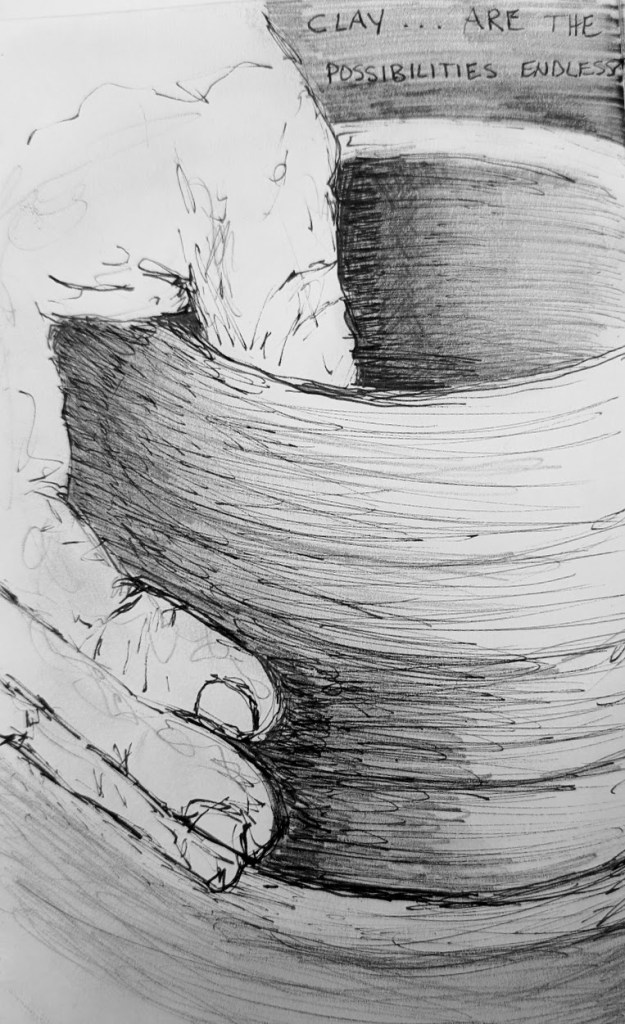
trusting that the hand that shapes us will not waste the clay.
The Invitation
If failure were off the table, faith would be unnecessary.
We would never learn to listen.
We would never need to lean.
Maybe the only real guarantee is not that we will never fall,
but that we will never fall alone.
The God who stayed in the fire with the three
and in the boat with the twelve
stays still —
gardening our losses into legacy,
our pain into presence.
So what would I attempt if I were guaranteed not to fail?
I would attempt nothing at all.
Because it is failure that keeps my ear to the ground,
my hands in the soil,
my heart tuned to the quiet fire.
Lord, till us tender.
Turn our tumbles into testimony.
Teach us to trust the ground beneath the breaking.
And call it good.
Tags: faith and failure, grace in the ordinary, clay and the potter, quiet fire, spiritual formation, peace in chaos, art and faith, living from the inside out
 Forming 2.0
This one really stirred something in me. That line — “failure is not the thief, it is the tiller” — stayed with me long after reading.
Your words reminded me that failure isn’t the end of the story but the soil where faith takes root. I love how you wove together courage, compassion, and the grace that grows quietly beneath what breaks.
Thank you for writing this — it’s honest, grounding, and full of hope. 🌿
Interestingly, our house group has been learning something that ties beautifully with this — The Gospel Grid.
We talked about how, at the start of the Christian life, we first become aware of the gap between God’s holiness and our sinfulness — and how Jesus bridges that gap completely.
But as we grow, we begin to see more clearly both God’s holiness and our own sin — not because either has changed, but because our awareness deepens. The more that awareness grows, the more the cross of Christ becomes central — sweeter, larger, more alive.
Your words echoed that truth for me — that even what feels like failure or loss becomes the very soil where grace and love grow deeper.
Have a lovely and joyous weekend…
LikeLiked by 1 person
Ulrich,
You’ve got good things growing here — deep roots and lived truth. The way you spoke about the Gospel Grid wasn’t theory; it had the weight of experience and the scent of real soil.
You should be sharing more of this. Start your own space. Let people find what you carry. The world needs voices that speak from both the wound and the wonder.
I’m grateful you keep showing up here.
LikeLiked by 1 person
Lord, till us tender.
Turn our tumbles into testimony.
Teach us to trust the ground beneath the breaking.
And call it good.
I love love love this prayer Dean.
Faith I’m learning is also a paradox just as life is one big paradox. If we didn’t fail we will never learn or grow. I don’t believe in a perfect life either. At present I’m unsure whether it is faith I’m practicing or not, but I’m going with the flow, trusting that this stream is taking me to better waters while I’m broken to be reshaped and formed…Hopefully a deeper kind of faith takes root and grow. A faith that can speak to mountains and they shall be moved.
LikeLiked by 1 person
Iba,
You write from the middle of the river — not from the shore, not from the end of the crossing, but from the flow itself. That is where faith is actually forged. You remind me that trust is not certainty; it is movement in mystery.
Your line about “being broken to be reshaped and formed” is the marrow of the journey. That is what clay feels before it becomes a vessel. And you are right — faith that can speak to mountains first learns to whisper to the soil beneath them.
Thank you for naming the paradox and staying in the stream. The Spirit does His finest work in that current.
– Dean
LikeLiked by 1 person
Dean, your understanding and explanation continues to astound me.
Your words and your thoughts provide more clarity and strength in this journey.
LikeLike