


What makes a good neighbor when the world has no borders left?
Jesus was asked, “Who is my neighbor?”
He answered with a story that crossed every line — a Samaritan binding wounds while the religious walked by.
Neighborliness, it seems, is not about location. It is about mercy.
Robert Frost offered another view: “Good fences make good neighbors.”
He was teasing us, not teaching us. Some fences protect peace. Others keep it out.
The wisdom is knowing which kind you are building.
I have lived beside saints, smokers, scholars, and scolders.
In dorms and rented flats. In a large house with friends.
I once managed a thirty-six-unit building where life moved like a slow elevator — people entering and leaving in silence and surprise.
A couple from South Africa showed up one rainy day, looking for a place to land.
He was studying literature. She was already writing books.
I welcomed them in, made coffee, explained the quirks of the old stairwell.
That small kindness reminded me that hospitality is not decoration; it is the foundation.
Later, when our family moved from Milwaukee’s east side to the west, the pattern continued.
Our new neighbor was a zookeeper — kind, earthy, steady.
She taught our kids the language of plants and animals, left seedlings at our door, watched our house when we traveled.
It was ordinary grace, the kind that builds slowly.

Not all neighboring goes well.
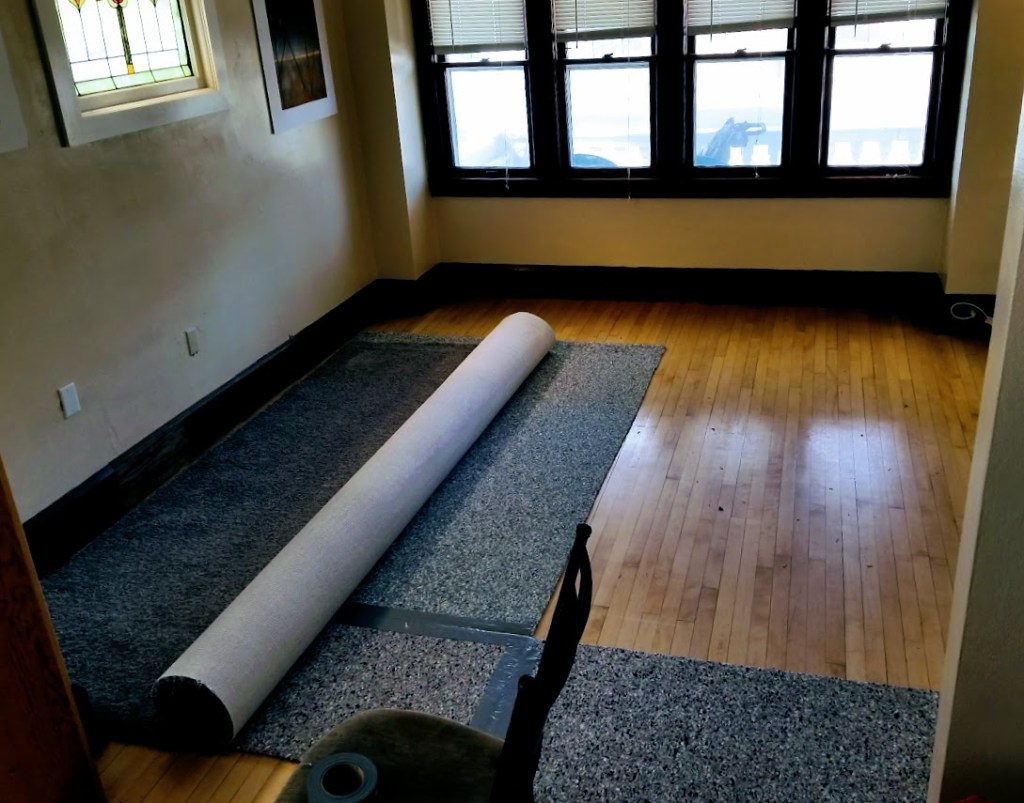
Years ago, renting the lower half of a duplex with little children, I learned what tension feels like through the ceiling.
Every footstep drew complaint.
I learned that noise becomes invasion when trust is thin.
Where we live now, the rhythm is quieter.
Neighbors wave from driveways. We bring in each other’s mail.
Last summer we built a privacy fence — a gift from a friend who helps us serve meals at the Hope Center in Waukesha.
He showed up with extra panels and stayed to help install them.
The woman next door, tough and talkative, approved.
She smokes while tending her immaculate lawn — clean planes of grass, straight as a ruler — and she keeps it greener than any of us.
The fence helped us both: not to divide, but to define the space where kindness could grow.
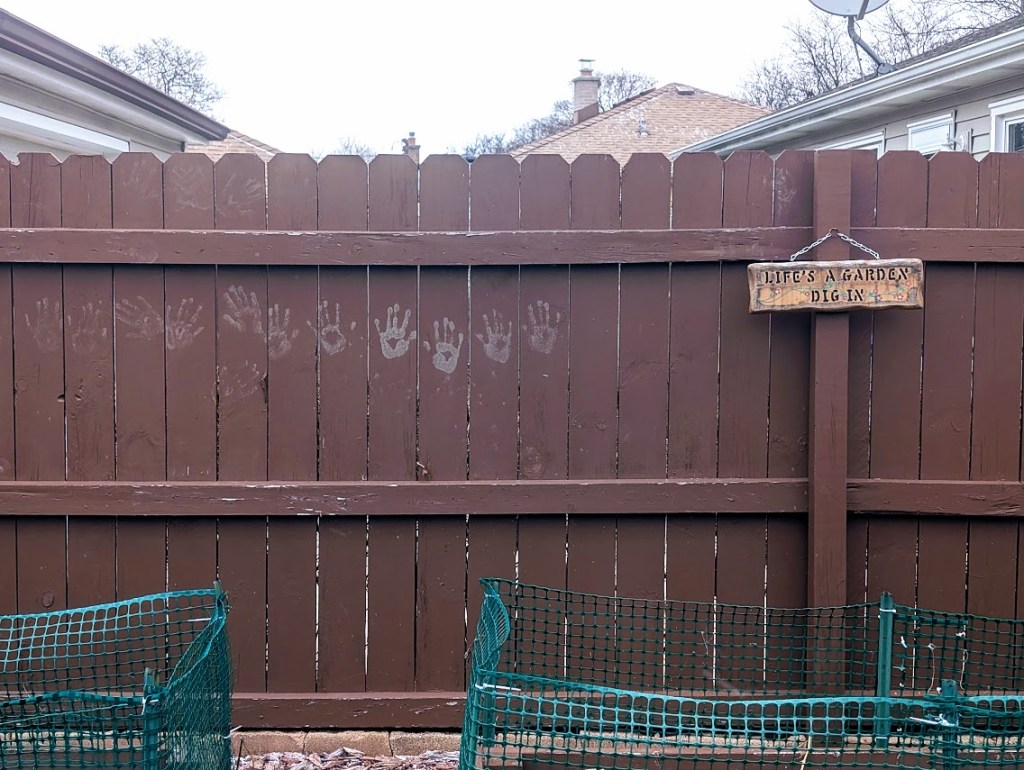
Our fence carries the handprints of our children, smudged high and low like a record of growth.
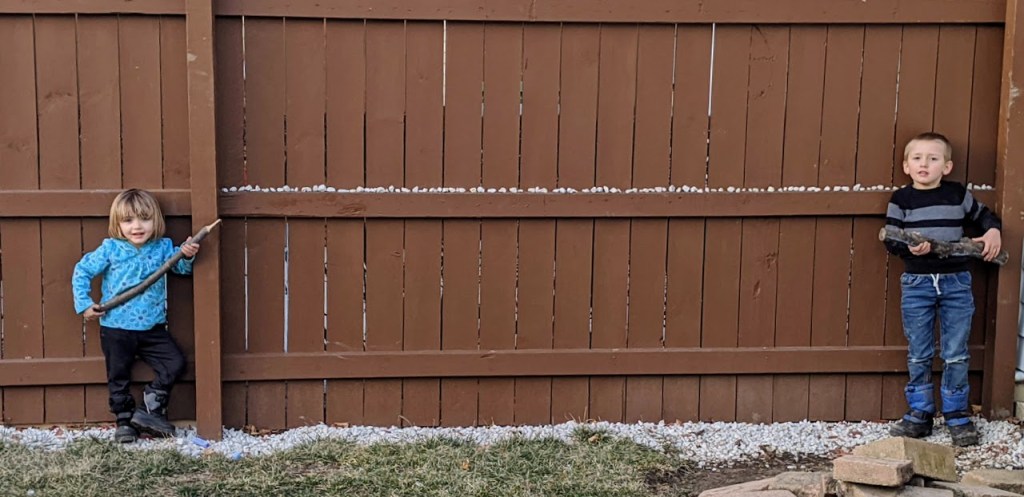
Beneath a small sign that reads “Life’s a Garden — Dig In,” they once played sword fights and castle defense, laughing on either side of the boards.
What began as privacy became a place for presence.
I used to think fences were meant to keep people out.
Now I see they can frame a story, hold a memory, even catch the light just right when mercy passes through.
So what makes a good neighbor?
Not proximity. Not opinion. Practice.
- Welcome – Make room for the stranger, whether across the hall or across the ocean.
- Boundary – Build fences that protect peace, not pride.
- Watchfulness – Notice without prying. See without staring.
Even online, the same truths apply.
I have found neighbors in the WordPress world — people who read, comment, and share with genuine care.
No fences, no mailboxes, just words and presence.
It is its own sort of neighborhood — quiet, kind, and real in the ways that matter.
In a world stitched together by screens, being a good neighbor may be one of the last local arts.
It asks for presence, patience, and the courage to bend toward mercy — again and again.
I Wonder:
Where is one small space you could make more welcoming?
What boundary could you rebuild with humility instead of fear?
Who nearby — online or across the street — could use your quiet watch this week?
Tags: #FaithAndCulture #GoodNeighbor #Fences #Community #Mercy #Boundaries #WordPressCommunity #Forming20 #SpiritualReflection
 Forming 2.0
You are a good neighbor here on WordPress, grafmr. I enjoyed this writing and the photos.
LikeLiked by 1 person
Thank you, Hazel. I always enjoy your posts — they shine with quiet faith and love. Grace and peace to you across the ocean.
-Dean
LikeLiked by 1 person
Now I remember you’re Dean. Thank you for your name again. Grace and peace to you too, Dean. I’m delighted to hear you enjoyed my posts. My heartfelt gratitude to you!
LikeLiked by 1 person
Dean, I admire how you respond to these prompts. Your words flow with grace, truth and humility. Your words are not too long or too short and they just make that impact.
I lament that nowadays we require boundaries in every aspect and fences when we never needed to. But then again, when there’s no understanding of respect, we have to.
I have found good neighbors right here, in this virtual world, you being one. I am eternally grateful for each one here and the community we are building. I am so glad we don’t require fences here, there’s much more grace and love.
Those questions you’ve put up require so much thought. There are boundaries that needs reconsideration through a humbled heart, but that is also a two way street.
LikeLiked by 2 people
Thank you, Iba. I like how you keep things honest — no grand fences, no big words pretending to be kindness.
Some days I think the world could use fewer poets and more good neighbors.
Then again, maybe they’re the same thing when we do it right.
Glad to have you as a neighbor here.
-Dean
LikeLiked by 1 person
Thankyou Dean. Being straightforward is a positive and a negative too 😁.
LikeLiked by 1 person
Such a beautiful reflection — I really loved how you connected the idea of neighbors beyond borders with small acts of everyday kindness. The line about fences framing stories instead of just dividing really stayed with me. Thank you for this gentle reminder of what it truly means to be a good neighbor — both in life and online.
To add to this, I’ve also been an admirer of the late Tim Keller and his teachings in Generous Justice. He envisions a “sequel” to the parable of the Good Samaritan — one that looks beyond helping a single person to addressing the systemic causes behind suffering.
For Keller, mercy (helping the immediate victim) and justice (stopping the underlying harm) are two sides of the same coin. A truly generous and biblical justice seeks to change the conditions that lead to repeated pain and poverty — and it’s the gospel that motivates this kind of neighbor-love.
He reminds us that we are more flawed than we dare believe, yet more loved by Christ than we dare hope. That truth humbles us, freeing us from self-righteousness and allowing us to serve without superiority.
The Samaritan’s love was costly — it took time, risk, and sacrifice. In the same way, true neighbor-love is lived, not just spoken. A gospel-shaped community becomes “a people for others,” marked by radical generosity and a quiet, steady effort to serve the common good, both locally and beyond.
It’s a lifelong task to mirror what Keller describes — but I’m learning, slowly, to walk that walk even as the world moves faster than I can fathom.
Have a wonderful weekend. 🌿
LikeLiked by 1 person
Thank you, Ulrich. Keller’s way of holding mercy and justice together rings true — mercy tending the wound, justice tending the pattern that keeps making wounds. It’s good soil for reflection and for practice.
I often picture it like a pebble dropped in still water. One small act of care sets off quiet rings that reach farther than we ever plan. The heavier the pebble, the deeper it sinks before the ripples spread.
I wonder how Keller’s teaching is landing in your house group these days — whether some of those ripples are finding their way into the circle you lead. I’d love to hear how it’s taking shape.
–Dean
LikeLiked by 1 person
Thank you, Dean — I love that image of the pebble and its ripples. It reminds me that even the quietest acts of mercy can reach further than we imagine.
At our house group, we’ve been doing some deep heart work — exploring six ways we tend to minimize sin (defending, faking, hiding, exaggerating, blaming, and downplaying). It’s been eye-opening to recognize those patterns in myself and see how easily they can keep grace at a distance.
We’ve also gone a step further into how we judge others — asking what that reveals about our view of God’s holiness and our own sin. It’s humbling to realize how often judgment grows from forgetting grace — both received and given.
Keller’s words on mercy and justice resonate so deeply here — that true neighbor-love grows out of humility and gratitude for grace. Thank you again for continuing to write reflections that stir both heart and thought. 🙏
I’m curious — how do you hold both the tenderness toward individual suffering and the challenge of structural change in your own life and writing?
LikeLiked by 1 person
I missed so much of your creative works the past few weeks. I just subscribed..again. Lol The childrens hand prints on the fence is priceless. I can not imagine you ever being a bad neighbor. I think anyone would be blessed to have you as a neighbor. If they aren’t, send them my way; I’ll give them a list of reasons why they should be. Lol Per usually your response is brilliant. Much Love
LikeLiked by 1 person