
I have an existential map. It has “You are here” written all over it. – Steven Wright
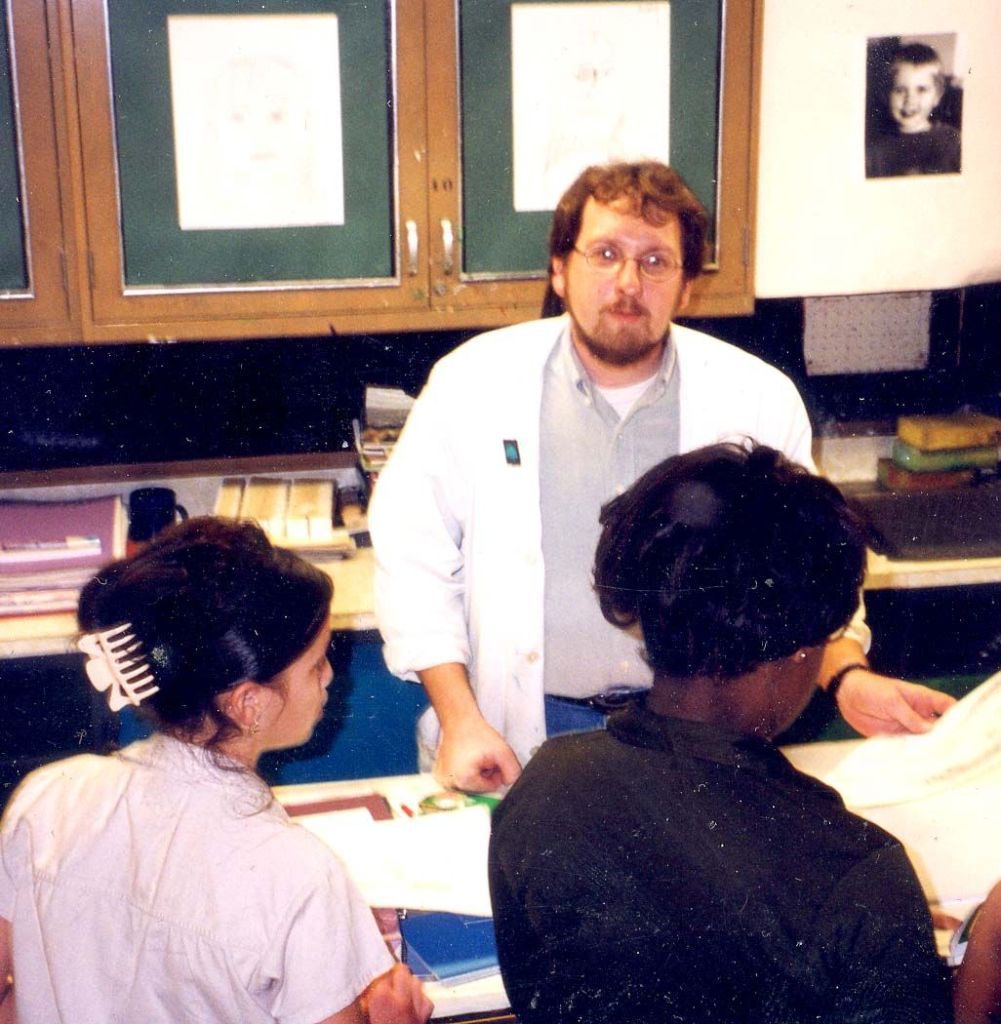
In teaching, as in life, we often find ourselves circling back to the same truths, just seen from different angles. Some students embrace this repetition. Others, like one particularly insightful sixth-grader of mine, simply step out into the hall and get to work.
The Student Who Walked Away
She told me, matter-of-factly, that I say the same thing three different ways.
“I understand that this is necessary for most students,” she explained, “but it cuts into my work time. So I go into the hall and start. That way, I don’t disturb your lesson, and I get more done.”
I am only slightly concerned that several of my Higher Level Students have begun to follow her example.
At first, I wasn’t sure how to feel about this. As a teacher, I’ve spent decades refining my craft, ensuring clarity, guiding my students toward deeper understanding. And yet, here was a student who had already learned the greatest lesson of all: that learning belongs to the learner. She had claimed it, shaped it to fit her, and carried it forward.
And isn’t that the mark of every great student?
The Pillars of Great Teaching and Learning
If there are great teachers, there must also be great students. But what makes either truly great?
Great Teachers
The Storytellers – Those who captivate, inspire, and make knowledge unforgettable (Jesus, Socrates, Confucius).
The Challengers – Those who provoke thought, question assumptions, and push students beyond comfort (Socrates, Nietzsche, Kierkegaard).
The Guides – Those who walk alongside the learner, knowing when to lead and when to step aside (Jesus with His disciples, Mr. Miyagi with Daniel-san).
The Masters of Repetition – Those who understand that true learning is layered, iterative, and deeply tied to memory (Aristotle, modern educators, and, apparently, me).
Great Students
The Receptive Learners – Those who absorb wisdom with humility (the disciples, Confucius’ followers).
The Questioning Seekers – Those who learn by wrestling with ideas (Nicodemus, Thomas, Jacob with God).
The Transformative Apprentices – Those who not only learn but embody and expand upon what they are taught (Paul, Augustine).
The Faithful Believers – Those who step forward despite uncertainty, trusting in something greater than themselves (Abraham, the martyrs, every teacher who shows up each morning).
And then, of course, there is the greatest teacher of all—the one who was also the greatest student.
Jesus: The Ultimate Teacher and Student
Every teacher who came after Christ called Him A Way. But Christ called Himself The Way.
He did not just instruct; He was the lesson. He did not just tell people to take up their crosses; He carried His own. He did not just teach obedience; He learned it through suffering (Hebrews 5:8). The Word became flesh, walked among us, and showed us what it means to live from the inside out.
Which brings me to an inconvenient truth about teaching: it’s not about us.
James, the half brother of Jesus, warned, “Not many of you should presume to be teachers…” (James 3:1). Why? Because teaching is an inherently dangerous act. When you teach, you shape minds, guide souls, and assume responsibility for something greater than yourself. A bad teacher can lead people astray. A great teacher must be a great student first—one who learns, unlearns, and learns again.
So what do we do with this?
From Education to Faith
Education is not just about knowledge. It’s about transformation. It’s about faith—the belief that something unseen is worth pursuing. The best students do not simply collect facts; they act on what they have learned. The best teachers do not merely dispense information; they point to something beyond themselves.
In the next set of posts, I’ll be shifting from education to faith—specifically, what it means to live from the inside out. If learning belongs to the learner, then life belongs to the one who claims it. And if the greatest student is the one who expects the impossible, as Kierkegaard suggests, then the greatest life is the one lived in pursuit of something greater than the self.
Because the greatest lesson of all is not how to master knowledge, but how to surrender to wisdom.
And sometimes, the best way to learn is to step into the hall and start doing the work.
What about you? Who has been the greatest teacher in your life? Was it someone who challenged you, guided you, or simply led by example? And are you more naturally a receptive learner, a questioning seeker, or a transformative apprentice?
Drop a comment below—I’d love to hear your thoughts!
 Forming 2.0
Leave a comment